
Your AI is Missing the Backstory: How to get better results with less work from you
Have you ever asked AI to write an email, help with a business decision, or prepare you for a customer conversation, only to receive an answer that sounded like it could have been written for any agent?
The problem might not be your prompt. It might be everything AI didn’t know before you wrote it. AI doesn’t automatically know that you spent ten years in finance before becoming an agent, that most of your business comes from downsizers, or that your customers appreciate how calmly you explain complicated decisions.
Without that backstory, AI has to guess. Give it more of the right context, and it can give you help that is much more relevant to the way you actually run your business.
FIRST, LET AI INTERVIEW YOU
Start a new conversation and paste this prompt:
“Act as a business interviewer. Ask me one question at a time to learn about my professional background, real estate experience, market, customers, communication style, strengths, values, and current goals. Ask follow-up questions when an answer could use more detail. After the interview, turn my answers into a one-page background document that another assistant could read to quickly understand me and my business.”
The questions may uncover details you wouldn’t have thought to include in a standard bio. Maybe your experience renovating your own home helps you guide buyers past cosmetic issues. Maybe a difficult transaction changed how you communicate with sellers. Maybe becoming a parent influenced the types of customers you most enjoy helping.
Those details help AI understand not only what you do, but how you approach it.

Turn Your Answers Into a Reusable Brief
After the interview, ask AI to organize what it learned into an “About My Business” brief. Review it carefully, correct anything that isn’t accurate, and add examples of language that sounds like you.
Your brief might include:
Your market and the customers you serve
Your professional and personal experience
Your approach to helping customers
The questions and challenges you handle most often
Your communication style
Your current business goals
Words, phrases, and approaches you want to avoid
Save the final version somewhere easy to find. You can paste it into a new AI conversation whenever the task would benefit from knowing more about you. Some AI tools may also allow you to save this information within a project or personalized settings.
Be sure to leave out names, confidential customer information, private transaction details, and anything else that shouldn’t be shared.
PUT YOUR BACKSTORY TO WORK
Once AI has the background, don’t simply ask, “Can you help me follow up with a seller?” Tell it to use what it knows about your experience and approach. Here are some ideas to try -
Prepare for a Listing Conversation: “Using my business brief, help me prepare for a conversation with a seller who is interviewing several agents and believes they should choose whoever suggests the highest list price. Give me questions I can ask, relevant experiences from my background I could reference, and a clear way to explain my pricing approach without sounding defensive.”
Instead of giving you a generic objection handler, AI can help identify which parts of your actual experience strengthen the conversation.
Improve Customer Follow-Up: “Using my business brief and communication style, draft a follow-up email to homeowners I met with yesterday. They are considering selling after twenty years in the home but feel overwhelmed by everything they need to do first. Keep the email reassuring and practical. Reference my experience helping customers prepare gradually, and include one clear next step.”
The result should feel more like a continuation of the conversation and less like a sales template.
Think Through a Business Decision: “Review my business brief and current goals. I’ve been invited to sponsor a community event. Ask me the questions needed to decide whether this opportunity fits the customers I want to reach, my available time, and the way I prefer to build relationships. Then help me evaluate the decision.”
Now AI isn’t only producing something for you. It’s helping you think through a choice using the priorities and experiences that already shape your business.
Turn Experience Into a Better Process: “Based on my business brief, interview me about how I guide a new seller from our first conversation through listing day. Ask about what I explain, what customers commonly worry about, and what I do to make the process easier. Then organize my answers into a repeatable seller onboarding process and point out any steps I may be handling inconsistently.”
This can help you turn something you’ve learned through years of experience into a process you can repeat, refine, or eventually teach to someone else.
KEEP TEACHING IT WHAT MATTERS
Your business brief doesn’t need to stay the same forever. Update it when you begin serving a new type of customer, develop a better process, refine your goals, or recognize another strength you bring to your work.
When an AI response misses the mark, be specific about why. Instead of saying, “I don’t like this,” try, “This sounds more formal than I do,” or, “I would never pressure a customer to make that decision.” Then add that preference to your brief.
The goal isn’t to have AI tell your story for you. It’s to give AI enough context to help you apply the experience, perspective, and judgment you already have.
The next time its answer could have been written for any agent, don’t immediately rewrite the question. Give it the part it’s missing: your backstory.
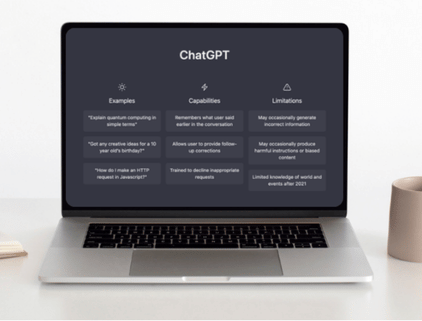
WANT MORE?
GET A COPY OF…
Our Complete ChatGPT Playbook for Real Estate Agents
Built for busy agents who want pro-level results without the overwhelm, this step-by-step guide gives you the shortcut to using AI effectively in your business and marketing
Find it in our Marketing Suite or reach out with the keyword ‘ChatGPT’ for a copy!